
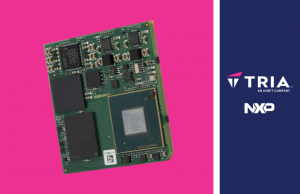
Open standard modules provide the pathway to simpler high-volume system design
Download Tria’s NXP-supported whitepaper on Open Standard Modules (OSM) and how this COM format supports simpler, cost-effective high-volume embedded system design.
Which OS is best for embedded computing?
Comparison of embedded operating systems including Yocto, Windows IoT Enterprise, Android and Ubuntu Pro, outlining key advantages, limitations and use cases.
DDR5 Memory for Embedded Systems: Benefits, Use Cases and Modules
DDR5 memory brings higher bandwidth, lower power consumption and improved reliability to embedded systems, supporting demanding workloads such as edge AI, robotics, medical imaging and industrial applications.
Designing for Vision AI at the Edge: What to Consider
Vision AI at the edge requires careful planning around camera inputs, local processing, real-time response and hardware that can operate reliably in the field.
What do you need from an embedded OS?
Clear guide to choosing an embedded OS, covering real-time performance, system footprint, security, connectivity, and long-term lifecycle considerations.

The RED Delegated Act Is Here: What It Means for Connected Device Makers
EU RED Delegated Act introduces mandatory cybersecurity requirements for connected devices placed on the European market.

AI takes centre stage in agriculture
AI and edge computing are transforming agriculture through autonomous machines, machine vision, predictive maintenance, and real-time crop monitoring.
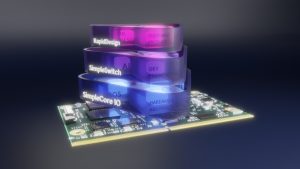
Harness platform flexibility for rapid development
A technical overview of how hardware standards, container workflows, and unified I/O layers support rapid prototyping and cross‑platform portability for embedded systems.

Feeding the future: Edge AI in the field
An overview of how Edge AI and embedded compute modules are transforming modern agriculture, enabling real-time data processing, predictive maintenance and autonomous farming systems.

Shaping the future of embedded
An outlook on the key trends shaping the embedded market in 2025, including increasing demand for performance, the growing role of AI, evolving wireless connectivity, stricter security requirements and the rise of compute modules such as OSM.
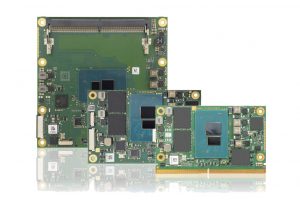
New SMARC and COM Express modules based on Intel Atom processors with eight cores
Tria’s SMARC and COM Express modules based on Intel Atom x7000RE and x7000C Series processors support compact medical, industrial and edge applications.
Streamlining Development: SimpleSwitch™ and The Embedded Kit
SimpleSwitch supports faster embedded software development, while The Embedded Kit adds production-ready features such as security, OTA updates and long-term maintenance.
Develop and Debug Qt Applications on SMARC Modules with SimpleSwitch™
Develop and debug Qt applications on SMARC modules using SimpleSwitch, Qt Creator, remote desktop access, kit configuration, deployment and debugging tools.
Develop and Debug Flutter Apps Directly on SMARC Modules with SimpleSwitch
Develop and debug Flutter applications on SMARC modules using SimpleSwitch, VS Code, debug mode, Hot Reload and Flutter DevTools.
Develop Directly your web application with Node.js and SimpleSwitch™ on a Compute Module
Develop and debug a Node.js web application directly on a compute module using VS Code, SimpleSwitch, project templates, packaging and deployment tools.
Harnessing the Power of Chromium for Embedded Web Applications
Use Chromium for embedded web applications with SimpleSwitch, including container setup, file browser access, static website deployment and local Python serving.
Effortless Web Application development on Tria SMARC Modules Using SimpleSwitch and VS Code
Develop and debug web applications on i.MX8M Plus SMARC modules using SimpleSwitch, VS Code, RDP access, browser templates and Vue.js project deployment.
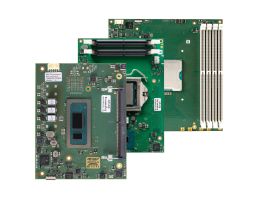
High-performance COM-HPC client module family based on 13th Gen. Intel Core processors
Tria’s COM-HPC Client module family based on 13th Gen Intel Core processors supports compute-intensive edge, AI, graphics and industrial applications.
Controlling GPIO from the Cloud Using SimpleSwitch™ and IoTConnect®- A Christmas Special
Control GPIO from the cloud using SimpleSwitch, IoTConnect, MQTTX and Python code, with a practical workflow for cloud-connected embedded systems.
Harnessing the Power of QEMU Virtual SimpleSwitch™ Images
Use QEMU virtual SimpleSwitch images to develop and test embedded software without relying on physical hardware, using virtual machines and SimpleSwitch deployment workflows.
Elevate Your Python Application Development with SimpleSwitch™: A Practical Guide to GPIO Control and MQTT Integration in your project.
Build a Python application with SimpleSwitch using GPIO control, MQTT integration, container setup, VS Code, GPIOD, SimpleCoreIO and paho-mqtt.
Building a Simple C Project with SimpleSwitch™
Build a simple C project with SimpleSwitch using VS Code, SDK settings, project templates, packaging, deployment, logs and debugging tools.
SimpleSwitch™ Tooling: Your Guide to Streamlined Development
SimpleSwitch tooling helps embedded developers manage containers, system logs, network settings, file access and remote desktop workflows on supported SMARC modules.
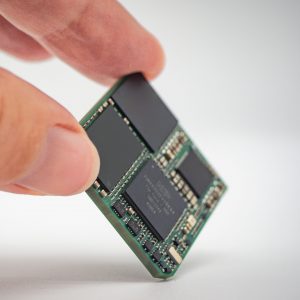
Tria’s solder-on OSM modules for fully automated production
Tria’s solder-on OSM modules support fully automated production for compact embedded systems, with scalable OSM Size-S, Size-M and Size-L module options.
Harmonious, fast and convenient development with SMARC and SimpleSwitch™
SimpleSwitch and SMARC help embedded teams reuse carrier board designs and software templates across supported SMARC modules for faster application development.
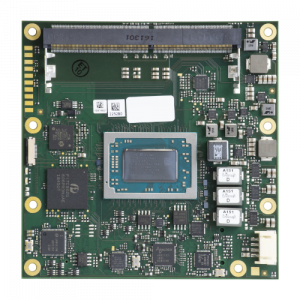
COM Express module family with AMD Ryzen Embedded R2000 processors
TRIA C6C-RYZ2 COM Express Compact modules are based on AMD Ryzen Embedded R2000 processors and support lifecycle extension for previous Ryzen-based compute modules.
‘Write once, deploy anywhere’: the architecture of SimpleSwitch™
SimpleSwitch helps embedded software teams develop with limited hardware dependency using an SDK, base images, QEMU and a container registry for supported SMARC modules.

Software development problems solved with SimpleSwitch™
SimpleSwitch helps embedded software teams prototype applications faster and reuse the same code across compatible SMARC modules during hardware selection and development.
Tria expands its broad SMARC™ module product portfolio to open up new markets and applications
Tria expands its SMARC module portfolio with scalable module families based on NXP, Renesas, Intel and AMD processor platforms for industrial, IoT and AI applications.
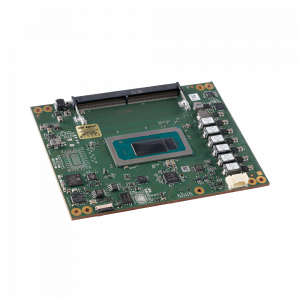
New optimized solutions for industrial applications
Tria introduces optimized compute module solutions for industrial applications, including COM Express, COM-HPC, SMARC and OSM modules based on Intel and NXP processor platforms.

How we’re engineering touch screens to eliminate ghost touch in mission-critical applications
Learn how Tria engineers reliable touch screen systems to reduce ghost touch in mission-critical applications where safety, accuracy and input validation matter.
Scalable modules with 12th Gen Intel® Core™ processors meet the challenges of modern medical devices
Scalable Tria compute modules based on 12th Gen Intel Core processors support modern medical devices with high-performance processing, graphics, AI acceleration and long-term availability.
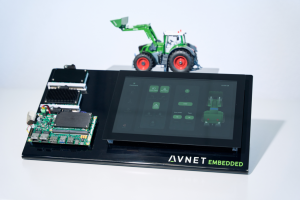
One code wonder: why SimpleSwitch will change your software development process forever
It’s a truth universally accepted that the work of software developers is inextricably linked to the hardware their code will finally run on. So, when the hardware changes, so must the code. It’s what has always happened but doesn’t make the process any less frustrating when it comes to meeting tight go-to-market deadlines, or when suddenly your chosen compute modules are unavailable. In these difficult circumstances, developers have always had to suck it up and start from scratch or simply…wait.
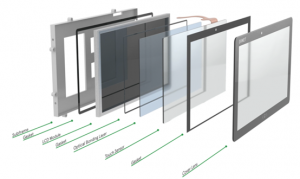
Explore our new and EMC stable design, with Air GAP between Touch Sensor and Cover Glass.
Learn how Tria designs EMC-stable projected-capacitive touch displays with an air gap between the touch sensor and cover glass for rugged industrial applications.

Tria adds new standard embedded display solution for EV charging stations
Tria is adding new standard 21.5″ display and touchscreen options to its portfolio designed specifically for high-use electric vehicle (EV) charging stations, in response to high demand from EV charging OEMs.

Looks better, feels better, works better: discover the world’s thinnest touch sensor
Today, we’re taking our sensor technology into a new era with the addition of AD Mesh – a lighter, sleeker and more bendable sensor which is a custom build and can be easily adapted customer needs. It joins our existing DITO, SP-ITO and Metal Mesh sensors, which are already widely in use across the world-class displays that we deliver to our customers in every industry.

Inclusive Design? The clue is in the name
There have been plenty of key moments in history when technology catches up with ambition and the results have been world changing. But there are also many many other, smaller, eureka moments that have been a quiet revolution for millions of lives. We say ‘quiet’ because unless you needed them, you likely wouldn’t even notice.
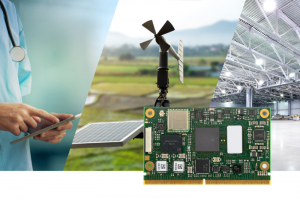
Avnet Embedded’s New Compact SMARC Module With Extreme Low Power Consumption
Avnet Embedded has announced a scalable SMARC 2.1.1™ system-on-module family designed for extremely low power consumption combined with good computing performance. The compact CPU boards are suitable for battery/solar-powered systems, IoT edge products, portable embedded controllers, handheld test and measurement devices, and mobile medical systems. The new power-efficient module generation is a further technology evolution step from microcontrollers (MCUs) to microprocessors (MPUs).

From trashcans to Street View: the everyday data that’s saving lives
Data, data, data, data… we read a lot about data lately, don’t we? But less about what it is capable of. The power it wields. The changes it can drive. The ways it can make our lives better – and how it can quietly save them. This, arguably, is the ultimate goal of the Smart City, to provide us with an environment so efficient, so purposeful and sophisticated that not only is our quality of life impacted, but life itself. But how might we see this happen? Let’s look at a few lifesaving scenarios that smart cities are putting into action today…

When energy is a problem, could data be a solution?
We’ve lost count of the many and inventive ways that organisations look to meet their sustainability goals, keep on top of costs and transform to operate more efficiently and effectively. And like the old adage about not seeing the forest for the trees, we know that quite often they are overlooking one obvious, but significant change that can address all three issues in one single action: through better management of energy consumption.

The everywhere gym
Today, if you take any measure of exercise, it’s highly unlikely that it’s in complete isolation. At one end of the spectrum, many of us have the ubiquitous smart watch or fitness tracker, keeping count of our steps and automatically recognising if we run, cycle or even swim. At the other end, we have elite athletes, who are also subject to scrutiny from worn sensors but produce data that is assessed by other means too. Their movement and form are captured on camera and analysed through machine learning. Vitals are monitored with precision tools and athletes’ bodies undergo rigorous assessment by medics using advanced imaging techniques.

It’s a smart time to be luxe
Coco Chanel’s famous take on the definition of luxury came from a world where the ultimate smart bed ($120,000 dollars with smartphone-controlled sleep scenarios, ambient lighting, fragrance control and private cinema) and bespoke Hermès Apple Watches did not exist. However, a clever designer and savvy brand builder, Coco was absolutely correct in that a little bit of luxury goes a long way. And, today, you certainly don’t have to be super-rich to feel super rich when the wealth of upscale products on the market can give your day that platinum-coated edge.
What is ISO 13485 certification, and why is it so important?
ISO 13485 defines quality management system requirements for medical device organisations. Learn what certification covers and why it matters.
What is COM Express®?
COM Express is a modular Computer-on-Module standard for embedded systems. Learn how its carrier-board architecture, module types, sizes and interfaces work.

EV Charging: The race to sustainability, loyalty and returns
If you’ve ever read the work of Nobel prize-winner Daniel Kahneman, then you’ll be familiar with the concept of ‘availability bias’, that is, the human tendency to default to the most recent information that comes to mind. But what does that have to do with electric vehicle charging? Well, they’re rapidly becoming an important topic of conversation, routinely springing up in news reports, included in government policy and even advertised on TV. You might be led to believe that they are commonplace, when, in reality, they’re not that easy to come by at all.
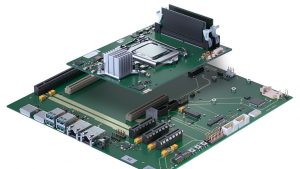
What is COM-HPC?
As acronyms go, what you see is what you get with the COM-HPC form factor standard. A far more manageable way of saying ‘Computer on Module for High Performance Computing’, the standard itself is just as straightforward – put simply, it’s fast. Modules manufactured to the COM-HPC standard have a faster network connection, a greater number of high-speed interfaces and can significantly enhance performance.
What is SMARC?
SMARC (Smart Mobility ARChitecture) is a 314-pin Computer-on-Module standard for compact, low-power embedded systems. Learn how SMARC modules support scalable designs, faster development and easier platform upgrades.

Machines in the middle: infection transmission via touchscreens
Public touchscreens and shared HMIs need careful design choices, from seamless screen construction to cleanable surfaces and application-specific hygiene requirements.
Does hardware matter?
A look at why hardware reliability, lifecycle management and platform stability matter when choosing embedded hardware for IoT and industrial systems.

3 use cases for embedded platforms enabling HMIs and IoT systems
Three embedded platform use cases showing how modular computing can support HMI, IoT gateway and customer-interaction display applications.
Industrial automation demands high flexibility
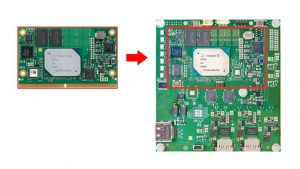
Industrial automation projects often need more than standard hardware. This article explains how flexible module-based designs and custom SBC solutions can help meet specific performance, interface and lifecycle requirements.

The rise of machine intelligence in the AI era
There is a lot of buzz around the deep learning technology and the remarkable market growth it has made. A deep learning solution, unlike AI and ML, needs a huge amount of embedded data and computational power to make machines learn human behavior, store knowledge, and make predictions using a trained neural network.

AI Inference at the Edge: A lesson from Marie Curie
AI inference at the edge can help turn sensor data into faster, more actionable decisions across healthcare, transport, manufacturing, robotics and security.